Khatmal vs Deemak — The Difference Between Bed Bugs and Termites
Khatmal bites you at night; deemak quietly eats your door frames. They are often confused, but they look different, live in different places and need completely different treatment.
"Keera" is the word many people use for any small insect inside the house, so it is no surprise that khatmal (کھٹمل) and deemak (دیمک) get mixed up. Both hide out of sight, both can be pale or brownish, and both seem impossible to get rid of with an ordinary spray.
But they are completely different pests. Khatmal is the bed bug, a blood-feeding insect that bites people while they sleep. Deemak is the termite, a wood-eating insect that never bites people but can hollow out door frames, furniture and books. Getting the identification right is the first step, because the treatment for one does nothing for the other.
Khatmal and deemak difference at a glance
What does khatmal look like?
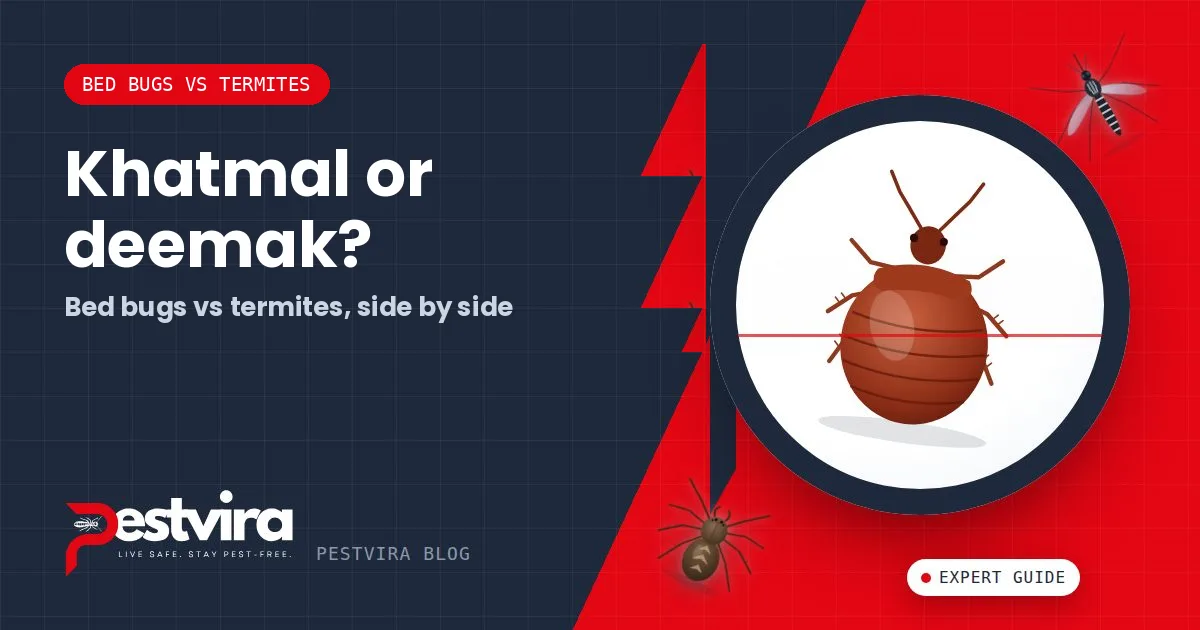
An adult khatmal is about the size of an apple seed — flat, oval and reddish-brown, becoming rounder and darker after a blood meal. Young bed bugs (nymphs) are smaller and pale, almost see-through, which is why they are sometimes mistaken for tiny white insects. Their eggs are white, about 1 mm long and glued into seams and cracks.
Khatmal does not fly or jump. It walks from the bed to the sleeper, feeds for a few minutes, then goes back into hiding. A sweet, musty smell in a heavily infested room is another clue. For a full guide to finding and treating them, see khatmal ka ilaj — bed bug treatment in Lahore.
What does deemak look like?
The deemak you are most likely to see is the worker: 4–6 mm, soft, creamy-white, with a light brown round head and no eyes. Soldiers have a larger orange-brown head with dark jaws. In spring and after monsoon rain, colonies release dark brown flying deemak with four long wings of equal size, which soon drop their wings near lights and windows.
Unlike khatmal, deemak hates light and open air. Workers stay inside wood, soil and the thin mud tubes they build up walls. Our full deemak insect guide shows each type, and deemak on walls explains what those mud lines mean.
Where each one hides in a Lahore home
A simple rule: if you are waking up with bites, think khatmal. If you are finding damage in wood or paper, think deemak.
Can one treatment kill both?
No. This is where most home remedies go wrong.
- Khatmal treatment targets the sleeping and sitting areas: inspection of every seam, heat or steam on mattresses, a residual treatment of bed frames, cracks and furniture joints, and a follow-up visit about two weeks later to catch newly hatched nymphs.
- Deemak treatment targets the colony in the soil: a drill-fill-seal termiticide barrier along floors and walls, injection of infested wood, and monitoring or baiting where needed. Spraying the bedroom does nothing to a colony living under the floor.
Using the wrong product also wastes money and can scatter the pest. Spraying kerosene or phenyl on mud tubes only kills the few workers inside, and bug sprays on a mattress rarely reach the eggs.
What to do next
If it is khatmal, see our bed bug treatment page and the bed bug checklist for hostels and hotels. If it is deemak, see deemak (termite) control in Lahore and the 9 signs of termites in Lahore homes. Not sure? Book a free inspection and a PestVira technician will confirm it on site.