Deemak in Wooden Furniture — Signs, Causes and How to Save Your Wardrobe
A wardrobe that sounds hollow, powder under a drawer or a thin mud line on the back panel — deemak in furniture is usually found late. Here is how to check, what causes it and how to save the wood.
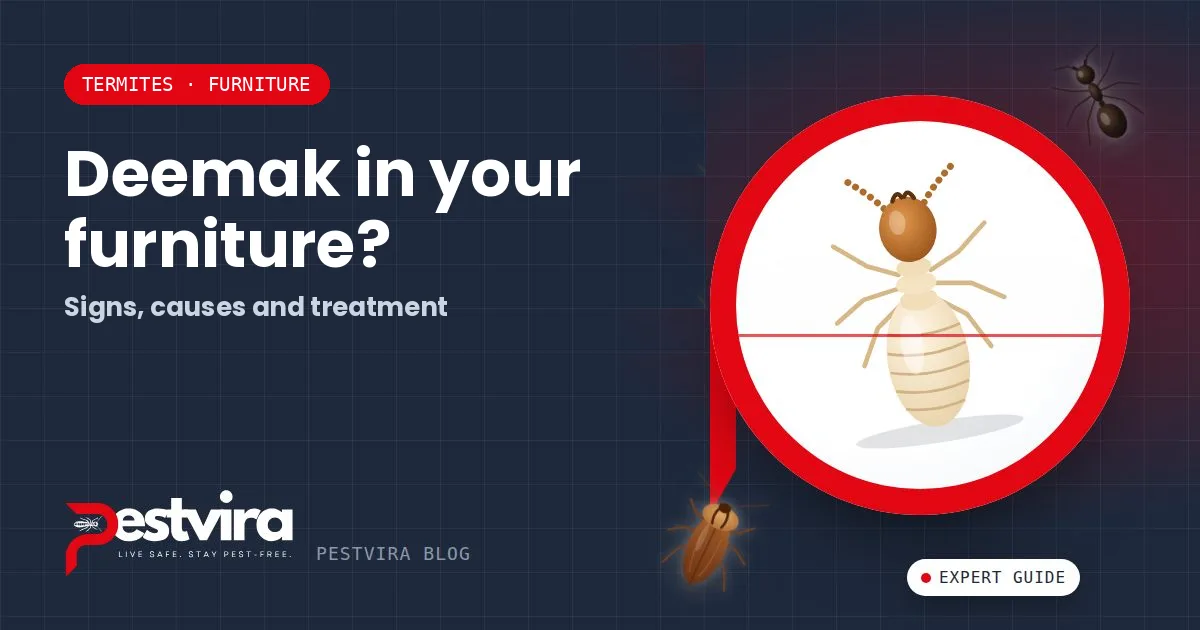
Wooden wardrobes, beds, kitchen cabinets and door frames are some of the most expensive things deemak can destroy — and because termites eat wood from the inside, the damage usually stays hidden until a hinge pulls out or a panel cracks under a light push.
This guide explains how to check your furniture for deemak, the two ways termites get into wood, what to avoid, and how the wood can still be saved if the damage is caught in time. Not sure what the insect looks like? Start with what deemak looks like.
Two kinds of deemak attack furniture
The difference decides the treatment: subterranean deemak must be cut off from the soil, while drywood deemak is treated inside the piece of wood itself.
Signs of deemak in furniture
- Hollow sound: tap the panel or frame with a screwdriver handle — damaged wood sounds dull and papery
- Mud lines: thin brown tubes on the back panel, legs or where the wardrobe meets the wall
- Powder or pellets: fine soil-like dust (subterranean) or tiny sand-like pellets (drywood) under drawers and shelves
- Soft or blistered surface: paint or laminate that bubbles, sinks or cracks along a straight line
- Loose fittings: hinges, handles or screws that suddenly pull out of the wood
- Wings: small piles of see-through wings near the furniture after rain
Fitted wardrobes and kitchen cabinets are checked from the back and bottom, where they touch the wall and floor — that is where deemak enters. Our list of 9 signs of termites in Lahore homes covers the rest of the house, and deemak on walls explains the mud lines.
Why deemak gets into furniture in Lahore homes
- Contact with walls and floors — fitted wardrobes, beds against outside walls and cabinets on the floor give deemak a hidden path from the soil.
- Damp walls — leaking pipes, bathrooms behind a wardrobe and AC drain lines keep wood moist, which termites prefer.
- Untreated construction — houses built without pre-construction termite proofing have no chemical barrier in the soil.
- Second-hand or stored furniture — old pieces from storage or other houses can bring drywood deemak with them.
- Cardboard and paper on the floor — boxes and files in store rooms feed the colony and lead it to nearby wood.
What not to do
It is tempting to move the furniture out or pour something on it, but some common reactions make things worse:
- Spraying kerosene, petrol or phenyl on the wood
- Breaking every mud line
- Moving the infested piece into another room
- Throwing the furniture away straight away
- Only treating the visible damage
- Leave the area undisturbed and take photos for the technician
- Keep one active tube so the technician can see the colony is live
- Keep it where it is until it has been inspected and treated
- Have it inspected — many pieces can be treated and repaired
- Treat the source too: the soil, wall junction or the whole piece of wood
Kerosene and petrol are also a fire risk inside a home, and they do not reach the colony living in the soil.
How professional treatment saves furniture
- 1InspectCheck every piece, the wall behind it and the floor junction for tubes and moisture
- 2IdentifyConfirm subterranean or drywood deemak — the treatment depends on it
- 3Wood injectionDrill small holes and inject termiticide into the galleries inside the damaged wood
- 4Soil barrierFor subterranean deemak, drill-fill-seal treatment along the floor–wall junction cuts off the colony
- 5PreventFix leaks, leave a small air gap behind furniture, follow-up visit to confirm activity has stopped
Once treatment has stopped the activity, badly damaged panels or frame sections can be repaired or replaced by a carpenter. Doing it the other way round — repair first — usually means the new wood is attacked too.
See the full process on our deemak (termite) control in Lahore page or book a free inspection. You can also send photos of the damage on WhatsApp first.