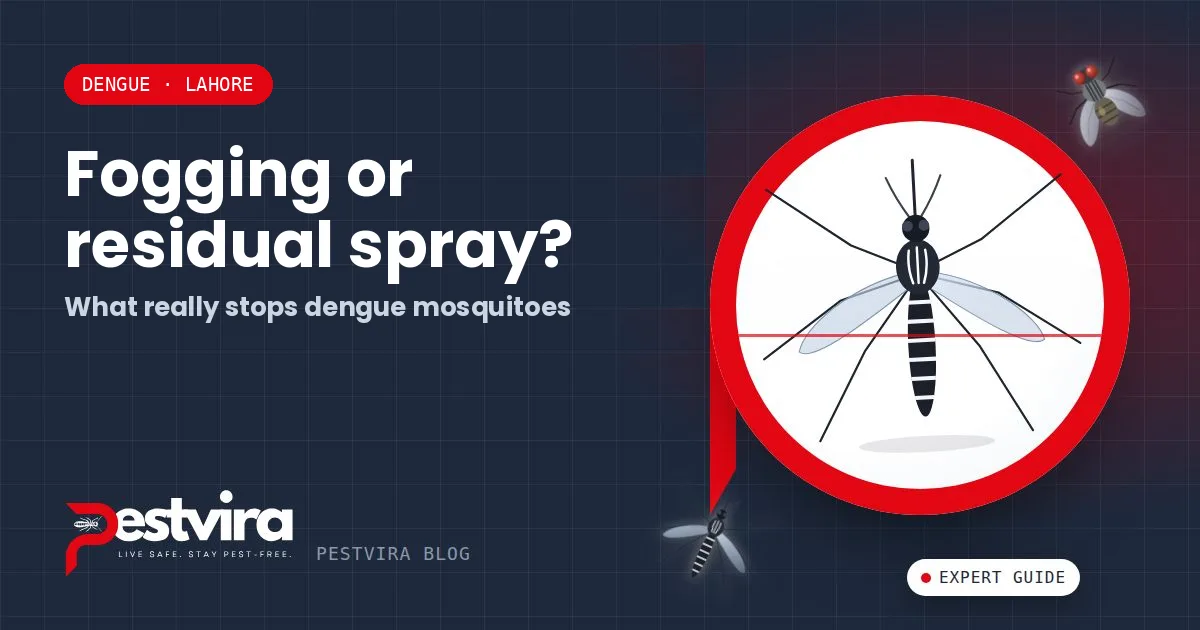
How to Identify the Dengue Mosquito — Aedes vs Ordinary Mosquitoes in Lahore
Black body, white stripes, daytime bites — the dengue mosquito is easy to recognise once you know what to look for. Here's how to tell it from the mosquitoes that only keep you awake.
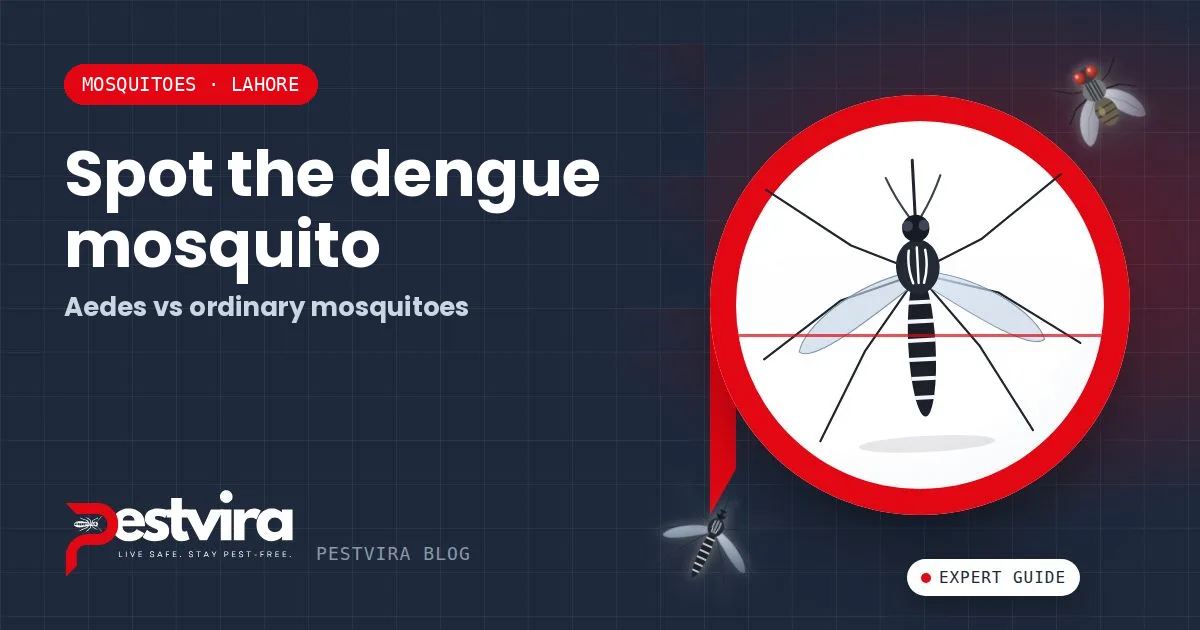
Not every mosquito in your house carries dengue. The ones buzzing in your ear at 2 a.m. are usually harmless Culex house mosquitoes. The one to worry about is quieter, smaller and bites in daylight: Aedes aegypti, the dengue mosquito.
Knowing how to recognise it tells you two important things — whether dengue mosquitoes are breeding near your home, and where to look for their breeding spots. This guide is part of our dengue season in Lahore plan.
How does the dengue mosquito look?
The Asian tiger mosquito (Aedes albopictus) also spreads dengue in Pakistan. It looks very similar but has a single straight white stripe down the middle of its back instead of the curved lyre pattern. Treat both the same way.
Dengue mosquito vs ordinary mosquito
- Colour: Aedes is black with bright white stripes; Culex is plain light brown
- Biting time: Aedes bites in daytime, mainly 2 hours after sunrise and before sunset; Culex bites at night
- Where it bites: Aedes targets ankles, feet and lower legs; Culex bites anywhere, often face and arms
- Breeding water: Aedes prefers small amounts of clean water; Culex prefers dirty drains and septic water
- Sound: Aedes is quiet; Culex gives the loud whining buzz at night
- Flight range: Aedes stays within about 100–200 m of where it was born
The Anopheles mosquito, which spreads malaria, is different again: it rests with its body tilted up at an angle and bites mostly at night.
When does the dengue mosquito bite?
Aedes aegypti is a daytime biter. Activity peaks in the early morning (roughly 2 hours after sunrise) and late afternoon (a few hours before sunset), but it will bite at any time of day in shaded rooms, under tables, in offices, schools and cars. It also bites at night in well-lit places.
That's why bed nets alone don't protect against dengue — children at school, adults at work and anyone resting in the afternoon need protection too.
Where does the dengue mosquito breed?
Dengue mosquitoes lay eggs on the walls of containers holding clean water, just above the waterline. The eggs can survive dry for months and hatch when water returns. Common spots in Lahore homes:
- Flower-pot saucers, indoor plants in water and vases
- Overhead and underground tanks with loose lids
- Desert coolers, AC drip trays and fridge drip pans
- Buckets, drums, tyres, tins and junk on rooftops
- Pet bowls, birdbaths and blocked roof spouts
We list every location in 12 hidden dengue breeding spots Lahore families miss.
What dengue mosquito larvae look like
In water, Aedes larvae are tiny wriggling "worms" about 5–8 mm long that hang head-down from the surface and dart to the bottom when disturbed. If you see them, empty the water onto dry ground, scrub the container walls to remove eggs and dry it.
How to control dengue mosquitoes
- Remove water weekly — empty, scrub and dry every container.
- Cover water storage — tanks, drums and buckets need tight lids.
- Treat water you can't remove — larvicides, including biological Bti, stop larvae becoming adults.
- Protect people — repellent, long sleeves and window mesh in the daytime.
- Professional anti-dengue spray — residual barrier spray on shaded resting spots and fogging when numbers are high.
- 1SurveyFind every breeding site on roofs, lawns and inside
- 2LarvicideTreat tanks, drains and water you can't empty
- 3Barrier sprayResidual treatment where adults rest in shade
- 4FoggingQuick knock-down when adult numbers are high
- 5RepeatEvery 2–4 weeks through the dengue season
See our dengue mosquito spray & mosquito control in Lahore page, and if someone at home has fever, read about dengue symptoms and when the season ends. To book anti-dengue spray, call +92 309 1777759.